
Fuel8 vs MyFitnessPal: Which Calorie Tracker Fits You?
MyFitnessPal offers cloud-synced tracking across devices with a vast food database, while Fuel8 prioritizes offline iPhone logging without requiring an account. This comparison examines privacy, features, and which philosophy fits different tracking priorities.
Fuel8 Editorial
14 October 2026
Updated 14 October 2026
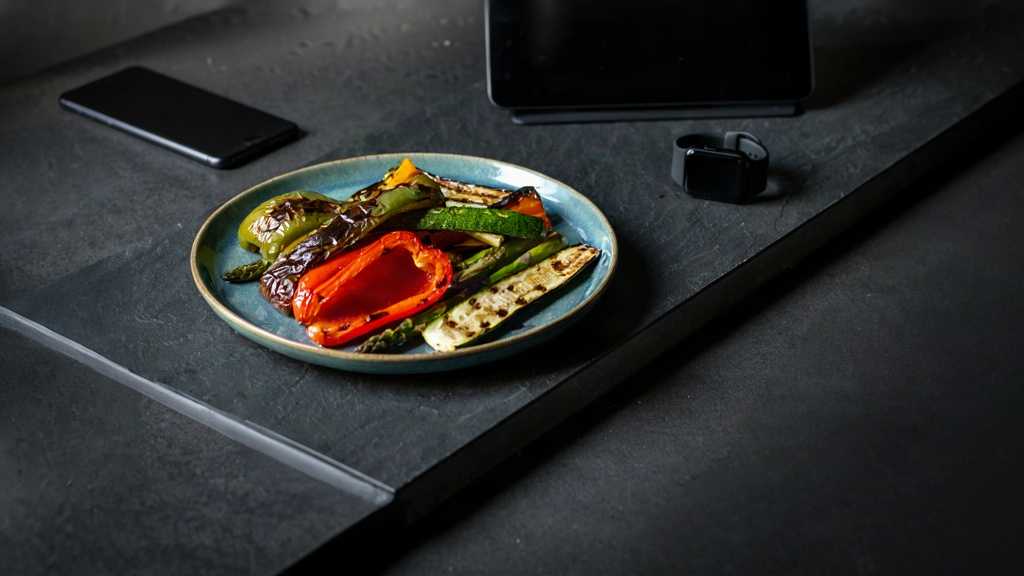
Choosing a nutrition tracker means choosing a philosophy about data and functionality. MyFitnessPal offers integration across devices, web access, and a vast food database built by millions of users, but it requires account creation and syncs everything to the cloud. Fuel8 prioritizes offline logging on iPhone, keeping meal records, workout logs, and progress photos on-device without requiring an account, though its offline database is smaller and curated. This comparison examines which approach fits different tracking priorities, from privacy and offline capability to ecosystem integration and coaching support.
| Feature | Fuel8 | MyFitnessPal |
|---|---|---|
| Account Required | No | Yes |
| Offline Food Logging | Yes (13,521 foods) | Limited; relies on internet for most searches |
| Barcode Scanning | Yes, offline after first lookup | Yes, requires internet |
| Voice Logging | Yes, on-device processing | Yes, cloud-dependent |
| Macro Tracking | Standard feature | Often premium |
| Workout & Progress Logging | Yes, with photos and pose guides | Yes, with integrations |
| Privacy Approach | Local logging without account | Cloud-based with analytics |
| Gamification | No streaks, no scores, trend view | Streaks, badges, daily verdicts |
| Coach Integration | Client-controlled data sharing | Limited native tools |
| Current Pricing | Included during open-launch; Founders Entry planned at US$3/month | Free tier available; Premium tiers vary by region and App Store |
| Features and prices checked on 14 October 2026. Availability may vary by country, device and subscription plan. |
Local-First Simplicity vs. Connected Ecosystem: Two Approaches to Tracking
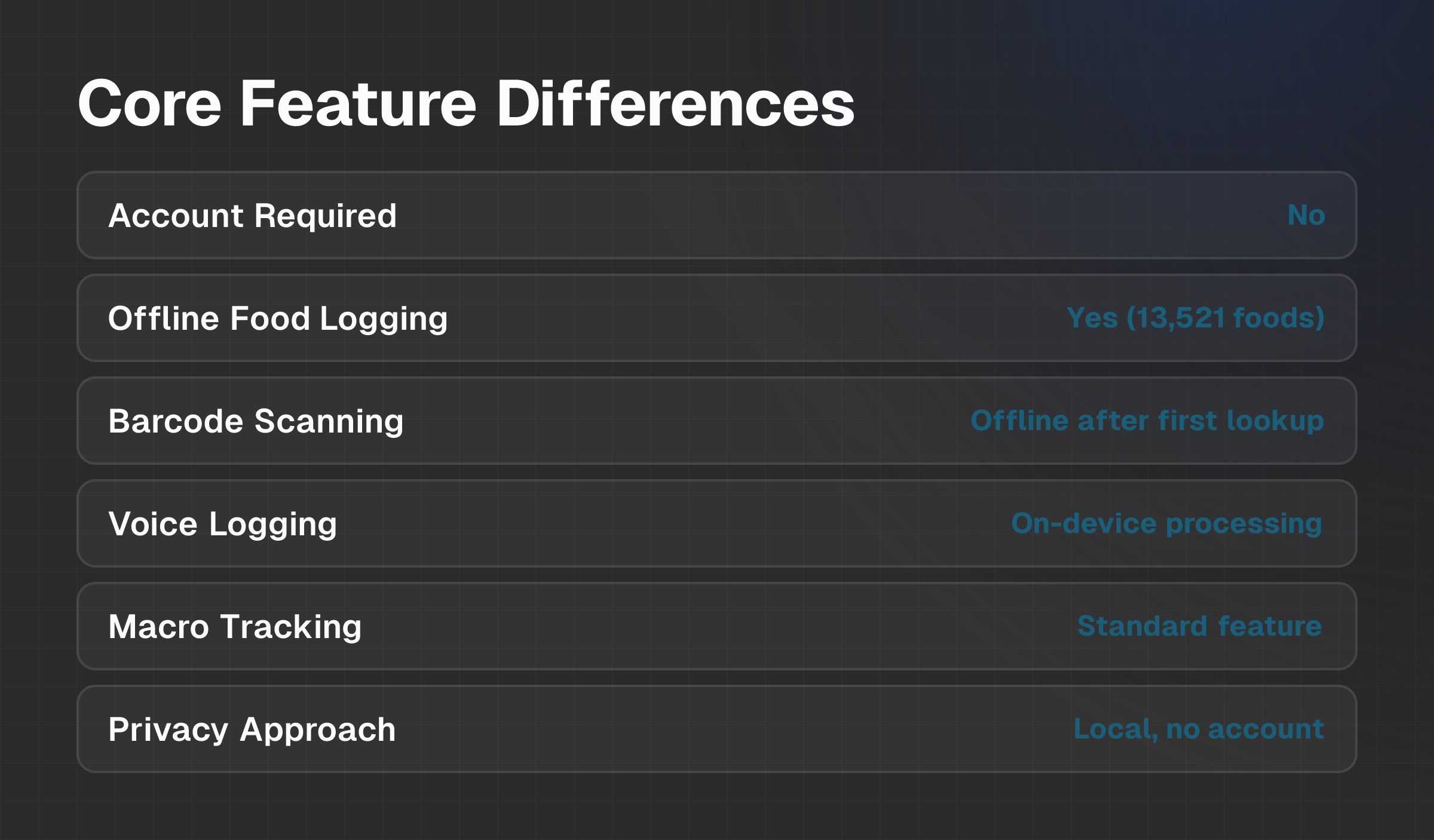
The difference between these apps reflects a fundamental choice.
Fuel8 operates on the principle that tracking works best when data remains under the user's control. Logging happens locally on the iPhone. Meal records, workouts, and progress photos are stored on-device. When someone logs food or checks macros, no data leaves the phone unless they explicitly choose to enable a connected feature: sharing data with a coach, syncing to Apple Health, or uploading a progress photo. Fuel8 states it includes "no analytics, no ad networks, no third-party code."
MyFitnessPal represents the connected ecosystem model.
It requires account creation and syncs data to servers, making meals, workouts, and stats accessible across devices, the web, and third-party fitness services. This approach enables deeper integrations with smartwatches, other fitness apps, and social features, but it inherently involves sharing personal data with the company and, potentially, with advertisers or analytics partners.
Neither approach is universally better. The choice depends on what matters most: offline independence and data sovereignty, or seamless multi-device access and integrations.
MyFitnessPal: Best For Connected Features
MyFitnessPal excels when the goal is to integrate nutrition tracking with a wider fitness ecosystem.
Database and Search: MyFitnessPal's food database benefits from contributions by millions of users, meaning niche, regional, and branded foods are often already logged. Search and barcode lookups rely on an active internet connection but offer breadth that offline databases can't match. This strength matters most for users eating diverse or restaurant-based meals regularly.
Multi-Device Synchronization: Logging on iPhone, checking progress on the web, and viewing stats on a tablet all pull from the same cloud-based record. This continuity appeals to users who shift between devices or want to analyze trends on a larger screen.
Third-Party Integrations: MyFitnessPal connects to fitness trackers, smartwatches, and other health apps, creating a unified view of activity, calories burned, and nutrition. For users already invested in an ecosystem of devices, this integration reduces the need to manually input workouts or steps.
Premium Macro Features: MyFitnessPal offers macro tracking, including targets in grams, but many advanced analytics fall under a premium subscription. Regional pricing and App Store pricing vary; specific current rates should be verified on the official app store or website before subscribing.
The Trade-off: Convenience and integration come at the cost of account dependency and cloud synchronization. An internet connection is required for core features, and data control rests with the company rather than the user.
Fuel8: Best For iPhone Local-First Logging
Fuel8 prioritizes simplicity, speed, and on-device data control.
Offline Capability: The app includes an offline food database of 13,521 items. After an initial barcode lookup, future scans of the same product work without internet. Voice logging processes audio on-device, not on a server. Users can log meals, track macros, and check progress entirely offline, valuable in areas with poor connectivity or when minimizing data transmission is a priority.
No Account Required: Logging begins immediately. No sign-up, password, or email. Fuel8 states it requests "nothing" from users in the app itself. This removes friction for casual tracking and eliminates the security surface of account credentials.
Data Stays on Device: Meal records, workout logs, and progress photos remain on the iPhone unless the user enables a specific connected feature. Optional integrations, such as sharing logs with a coach, syncing to Apple Health, or uploading a new barcode to the database, are user-initiated, not automatic. Fuel8 states "nothing logged leaves your phone" without explicit action.
Standard Features, No Paywalls: Barcode scanning, voice logging, macro targets in grams, and the ability to log past days are included as standard. Fuel8 states Founders Entry is planned at US$3 per month, but tools are currently included during the open-launch period. This pricing and availability can change.
Coach-Focused Tools: If using a coach, the app allows the coach to view all client logs on one screen, send custom workouts, and track progress, while the client controls what data is shared. This design acknowledges that many trackers are used under professional guidance, and logging for mobile vendors or shift workers matters as much as home meal tracking.
No Gamification: Fuel8 displays a weight trend rather than a daily verdict and includes "no streaks, no shame, no scores." The intent is to reduce psychological pressure and encourage habit over guilt.
The Trade-off: Simplicity and privacy come at the cost of ecosystem integration. The food database is smaller and curated rather than crowdsourced, so very niche items may require manual entry. Multi-device access requires manual data transfer or optional integrations rather than automatic sync. The app is iPhone-only.
Feature-by-Feature Trade-offs: Where Each App Wins
Speed of Logging
Better fit: Fuel8.
Voice logging and barcode scanning work offline after initial lookup, and meals save for one-tap re-logging. The app prioritizes friction-free entry.
Trade-off: MyFitnessPal's larger database may reduce the need to manually refine entries, but it requires internet access for most searches and barcode scans.
Privacy and Data Control
Better fit: Fuel8. Local logging without an account and no automatic syncing to servers gives users direct control over where their data exists.
Trade-off: MyFitnessPal's convenience requires account creation and cloud storage. Data privacy policies are complex due to its business model and ecosystem integrations.
Offline Functionality
Better fit: Fuel8. The app functions completely offline, with a cached food database and on-device voice processing. Tracking never depends on an internet connection.
Trade-off: MyFitnessPal's reliance on online connectivity limits usefulness in areas without reliable internet or when data usage is a concern.
Macro and Workout Tracking
Draw, with nuance.
Both apps track protein, carbs, and fat alongside calories and offer workout logging. Fuel8 includes macro targets as standard; MyFitnessPal often requires a premium subscription. Fuel8 adds progress photo tracking with pose guides. MyFitnessPal offers deeper integration with fitness devices and broader analytics.
Trade-off: Fuel8 emphasizes inclusivity of features without paywalls. MyFitnessPal offers more granular analysis but reserves it for paying users.
Motivation Approach
Winner depends on psychology.
Fuel8 avoids gamification, using a trend view and emphasizing consistency without streak pressure. This suits users who find scores and badges demotivating or who have struggled with guilt-driven tracking. On the days you don't want to, just do the steps applies to this philosophy.
MyFitnessPal uses streaks, badges, and daily scores to encourage engagement, which works for some users but may foster dependence on external validation or burnout.
Trade-off: Neither is objectively better. Fuel8 targets intrinsic motivation; MyFitnessPal targets external engagement.
Coach Integration
Better fit: Fuel8. The app is designed with coaching workflows in mind, allowing coaches to review client logs in a single view, assign workouts, and track progress with client-controlled privacy.
MyFitnessPal offers some coaching tools but isn't architecturally centered on the coach-client relationship.
Trade-off: Fuel8 prioritizes coach workflows; MyFitnessPal prioritizes individual social features and broad integrations.
Cost Structure
Better fit: Fuel8 for feature breadth per dollar. Fuel8 includes barcode scanning, voice logging, macro targets, and past-day logging without upselling. Founders Entry is planned at US$3/month during the open-launch period (pricing and availability subject to change).
MyFitnessPal offers a free tier but paywalls many core features. Premium plans vary by region and App Store; current pricing should be verified directly.
Trade-off: Fuel8 uses a flat, inclusive model. MyFitnessPal uses a freemium model with upsell, appealing if the free tier suffices, costly if advanced features are needed.
Nutrition accuracy and logging limitations
Neither app can guarantee that every calorie or nutrient value is exact. Results depend on the selected food entry, serving size, recipe ingredients and information supplied by food manufacturers or database providers.
A larger database may make foods easier to find, but database size alone does not prove that every entry is more accurate. Barcode matches, voice-recognised foods and manually selected portions should all be reviewed before they are added to a diary.
Fuel8 and MyFitnessPal are general wellness tools, not medical devices. Their calorie targets and nutritional values should be treated as estimates rather than medical or clinical advice.
Which App Fits Your Priorities
Choose Fuel8 if:
- You prefer tracking without creating an account or signing in.
- You eat in areas with unreliable internet or want to minimize data transmission.
- You use an iPhone and don't need multi-device sync.
- You find streaks and scores demotivating.
- You work with a coach and want simple, private log sharing.
- You value broad feature access without premium paywalls.
- You eat out regularly and want to log meals without friction.
Choose MyFitnessPal if:
- You want seamless access to meals and stats across iPhone, web, and tablet.
- You use fitness trackers, smartwatches, or other health apps and want integrated data.
- You prefer a crowdsourced food database with rare or specialty items pre-logged.
- Gamification motivates you: streaks, badges, daily scores.
- You need broad third-party integrations beyond nutrition tracking.
- You're willing to trade account dependency for multi-device convenience.
Both apps can support consistent tracking. The choice isn't about which one "works"; consistency and accurate portion logging matter far more than app features. The choice is about which philosophy, local-first simplicity or connected ecosystem, aligns with how you log, where you log, and what you value.
FAQs
Is Fuel8 a free alternative to MyFitnessPal?
Fuel8’s food logging, barcode scanning, voice logging and progress tools are currently included during its open-launch period. However, Fuel8 should not be described as permanently free. The company says its Founders Entry membership is planned at US$3 per month. Pricing and included features may change after launch.
Can Fuel8 be used without an account?
Yes. Fuel8 allows you to log food, workouts, weight, water and sleep locally without creating an account. An account may be required if you choose to use connected services such as account sync, the web dashboard, coach access or progress-photo storage.
Does Fuel8 work without an internet connection?
Many of Fuel8’s core logging functions work locally on a compatible iPhone. Its food database is stored in the app, and previously resolved barcode entries can be accessed without a connection. New barcode lookups, account sync and other connected features may require internet access.
Is Fuel8 available on Android?
Fuel8 is currently designed for iPhone and is not available as an Android app. Android users, or people who regularly switch between different operating systems, may find MyFitnessPal’s broader platform availability more suitable.
Does Fuel8 sync across devices?
Fuel8 keeps records locally by default when it is used without an account. Optional account features can provide access to connected services, but users should not assume that every locally stored record automatically appears on another device. Check Fuel8’s current support information before relying on multi-device access.
Is MyFitnessPal’s barcode scanner free?
MyFitnessPal’s barcode-scanning availability can depend on the membership plan, country and purchasing platform. Its current product materials include Barcode Scan among its paid logging features in relevant markets. Check the plan shown in the app before subscribing because regional features and prices can change.
Which is more private: Fuel8 or MyFitnessPal?
Fuel8 is the better fit if your priority is logging locally without creating an account. It says it does not use advertising or analytics and allows core records to remain on the iPhone. Data may still leave the phone when you enable connected features such as account sync, Apple Health sharing, coach access, new barcode lookups or progress-photo uploads. MyFitnessPal uses an account-based model designed for cloud synchronisation and connected services. This does not mean that MyFitnessPal is unsafe; the two products simply use different approaches.
Which app is better for wearable and app integrations?
MyFitnessPal is the stronger fit for users who want a broad connected ecosystem. It supports connections with numerous apps and devices across fitness, activity and health tracking. Fuel8 has a narrower iPhone-first approach and supports selected connections such as optional Apple Health sharing.
Is Fuel8 more accurate than MyFitnessPal?
There is no verified evidence establishing that either app is universally more accurate. Results depend on the selected food entry, serving size, recipe information and data supplied by food manufacturers or database providers. A larger food database can improve coverage, but database size alone does not prove nutritional accuracy.
Which app should I choose: Fuel8 or MyFitnessPal?
Choose Fuel8 if you use an iPhone and prioritise local logging, no mandatory account and a focused food-tracking experience. Choose MyFitnessPal if you need Android or web access, cross-device synchronisation or connections with a wider range of apps and wearables. Neither app is the best choice for every user, so the decision should be based on the features you will use regularly.
Features and pricing checked on 14 October 2026. Availability may vary by country, device, subscription plan and app-store region.
- Comparison
- MyFitnessPal vs Fuel8
- nutrition tracking apps
- offline food logging
- private nutrition tracker
Fuel8 is on the App Store.
A food diary for iPhone. It tracks protein, carbs and fat alongside calories, shows a weight trend rather than a daily verdict, never adds exercise calories back, and has no streaks to break.
Download on the App StoreGet the seven-day Fuel8 email guide, including how the app works and membership benefits. Then occasional recipes and product updates.
Your name and email go to Grow More Services L.L.C-FZ, the company that builds Fuel8, and are stored in Resend so we can email you the seven-day app guide, membership benefits, recipes and product updates. An account is not required. Unsubscribe in one click, any time.
This piece is editorial content and not medical or dietary advice. The full health disclaimer is below.