
Eating Out & Nutrition Strategy
Macros at Food Trucks: Quick Logging for Mobile Vendors
Food trucks rarely print nutrition facts. Learn to estimate and log macros by asking vendors about ingredients, breaking meals into components, and using voice logging to maintain consistency without sacrificing street food flexibility.
Fuel8 Editorial
13 October 2026
Updated 19 October 2026
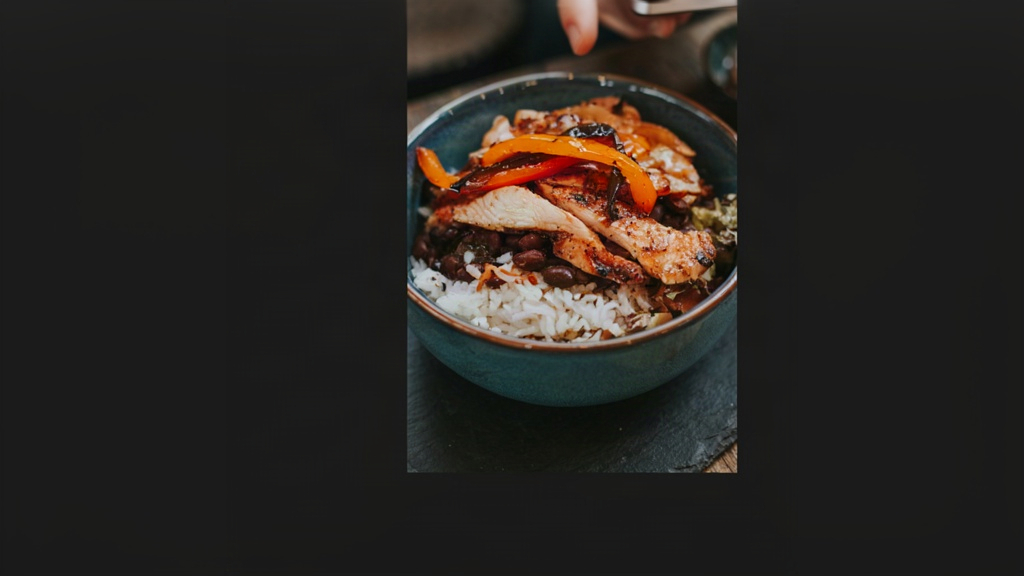
Food trucks and mobile vendors rarely print nutrition facts. The fastest way forward is a three-step cycle: ask the vendor about key ingredients and cooking methods, break the meal into components (protein, carbs, fat), then search your logging app's offline database for similar dishes or individual ingredients. Voice logging accelerates entry, and saving frequently ordered meals as custom entries lets you log future visits in seconds. Imperfection is acceptable here; consistency matters far more than precision.
This guide is for social eaters and frequent restaurant-goers who want to maintain their macro targets without sacrificing the flexibility of street food. It assumes familiarity with macro tracking but provides specific tactics for the unstructured, label-free environment of food trucks and temporary vendors.
Quick answer: How to estimate and log food truck macros without printed data
The core strategy is vendor communication paired with visual estimation. Ask the staff about cooking methods, grilled versus fried, what oil they use, whether sauces contain added sugar. Mentally separate the dish into its main components: protein source, carb source, fat source, and vegetables.
Use your logging app's offline database to find similar entries that match the preparation method. Speak the estimated components into the app if voice logging is available. Save frequently ordered meals as custom entries for one-tap logging on future visits.
Accuracy will be limited. Studies show that calories in restaurant meals are underestimated by an average of 175 calories, with error increasing as meal size grows. Accept this margin. Regular, imperfect logging beats skipping meals entirely or abandoning tracking because exact precision feels unattainable.
What you need first
Three tools make food truck macro logging practical.
A logging app with offline capability. An offline database lets you search for foods and log meals without an internet connection, a critical advantage when connectivity is spotty at food truck events, outdoor markets, or busy street corners. Fuel8 includes a database of 13,521 foods accessible without connection.
Voice logging. Speaking your meal into the app ("chicken, rice, black beans, 4 ounces protein, 1 cup rice") is faster than typing, especially in crowded or moving environments. This feature reduces friction. It keeps you logging even when note-taking would feel awkward.
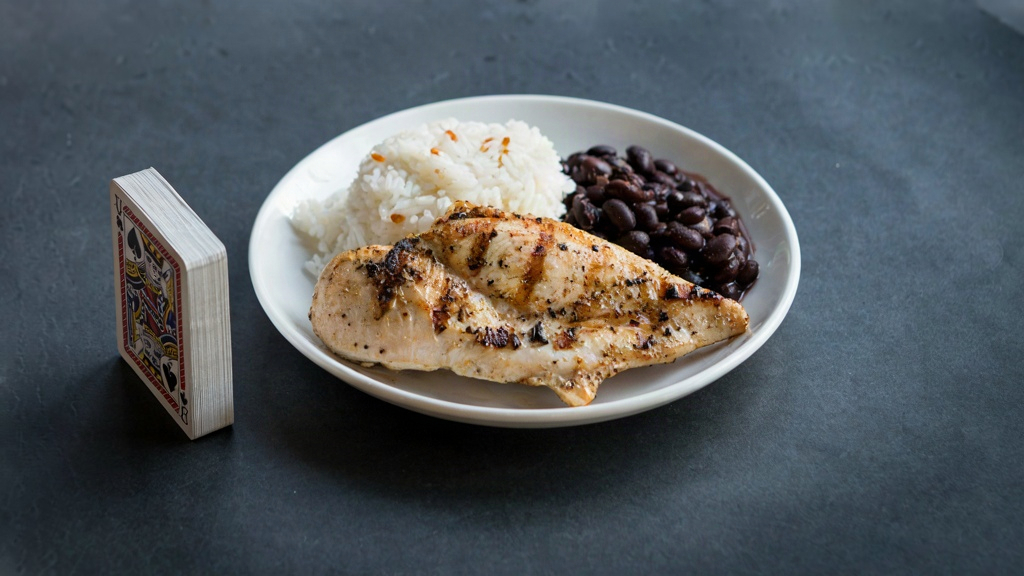
A simple portion reference system. Learn a few visual anchors to estimate serving sizes quickly. A deck of cards roughly equals 3 ounces of protein; a golf ball approximates one serving of fat. These quick comparisons replace the need to pull out a scale at the food truck counter.
Familiarity with macros themselves is assumed. If macro tracking is new, start with a simple framework before tackling the food truck environment.
Step-by-step: Logging a food truck meal
Before ordering
Ask the vendor about key details. Request specific information: "Is this chicken grilled or fried?" "What kind of oil do you cook with?" "Are there sauces with added sugar?" Not all vendors will have detailed answers, but many will know their core ingredients and methods. This step takes 30 seconds and dramatically improves your estimate.
Identify the meal's components. Look at what you're ordering and mentally break it into four categories: protein (chicken, beans, tofu), carbohydrates (rice, flatbread, potatoes), fat sources (oil, nuts, cheese), and vegetables. This framework makes estimation clearer.
During logging
Estimate portion sizes. Use your visual anchors. The protein portion looks like one deck of cards? Estimate 3 ounces. The rice fills roughly a tennis ball? Estimate ½ cup.
These estimates need not be exact. Consistency matters more than precision.
Search your app's database for similar entries. Look for dishes that match the preparation method. If the vendor grilled the chicken, search "grilled chicken breast" rather than accepting a fried option. If the rice was cooked in oil, find entries that reflect that. Prioritize specificity over convenience.
Log the components. Enter each ingredient with your estimated portion. If voice logging is available, speak the components aloud: "four ounces grilled chicken, one cup white rice, half cup black beans, one tablespoon olive oil." The app converts speech to text and searches its database.
Save as a custom entry if you order frequently. If this is a meal you'll order again, save the logged entry with its estimated macros as a custom meal. Future visits require one tap instead of re-logging every component.
After logging (optional refinement)
Review and adjust when possible. If you return home and discover more accurate information about the meal, open the entry and adjust the estimate. This step is optional but useful for learning which vendors' portions are larger or smaller than your visual estimates suggest.
Example or scenario: Logging a food truck burrito bowl
A frequent restaurant-goer stops at a food truck for lunch. The vendor offers a burrito bowl: grilled chicken, cilantro-lime rice, black beans, peppers, and a drizzle of crema.
Before ordering: The customer asks: "How much oil is in the rice? Is the crema measured?" The vendor says the rice is cooked in about a tablespoon of oil per serving, and crema is roughly 2 tablespoons per bowl. The chicken is grilled with minimal oil.
Estimating portions: The chicken portion covers about three-quarters of a deck of cards, roughly 4 ounces. The rice fills a small to medium container; the customer estimates 1.5 cups. Black beans occupy a scoop; estimate ¾ cup. The crema is already quantified by the vendor: 2 tablespoons.
Logging: The customer opens Fuel8, uses voice logging to speak: "grilled chicken breast 4 ounces, cilantro lime rice 1 and a half cups, black beans cooked ¾ cup, crema 2 tablespoons." The app searches its database and returns entries matching each component. The customer selects the matches closest to the preparation method and logs the meal.
Total time: under 90 seconds.
Future visits: If this is a regular order, the customer saves the meal as a custom entry called "Truck Bowl, Chicken." Next time, one tap logs the entire bowl, assuming portion size remains consistent.
Imperfection acknowledged: The customer's estimates may be off by 10-15%. The rice might contain slightly more oil, or the crema might vary. Research shows meals perceived as healthy are underestimated by 20% in adults and 25% in adolescents compared to clearly indulgent ones of the same actual size. This bowl may fall into that category. The customer accepts this margin and logs anyway. Over a week of consistent logging, small errors average out.
Common mistakes: What undermines food truck macro logging
Underestimating because the meal looks healthy. A vendor markets a salad as "light" or "clean," so the customer assumes low calories. In reality, dressings, oils, and add-ons like nuts or cheese often contain significant calories. The research is clear: meals perceived as healthy are underestimated by 20% in adults and 25% in adolescents. Log the visible fat sources carefully, even if the meal feels virtuous.
Skipping the vendor question. Asking feels awkward, but it takes 30 seconds and removes guesswork. Vendors often know their cooking methods; use that knowledge.
Over-relying on the database without checking preparation method. A "chicken breast" entry that lists fried chicken will misrepresent a grilled version by 40+ calories per ounce. Spend an extra five seconds finding the preparation method that matches reality.
Abandoning the log when an estimate feels imprecise. The goal is not perfect accuracy; it is consistent tracking. A day logged badly is worth more than a day not logged. Research on eating out shows that planning to compensate the next day recovers only about a third of the overconsumption. Build the habit now, not in an imagined "perfect" future.
Assuming offline is a limitation. Many people treat the offline app as a fallback. It is actually a feature. Food truck venues often lack reliable data connection. An app that works without internet removes that barrier entirely.
Ignoring liquid components. Sauces, oils drizzled on top, and creamy condiments are easy to overlook because they do not occupy visible space like rice or meat. Ask about these. A vendor's standard sauce serving is information worth capturing.
FAQs
What if the vendor doesn't know their ingredients or cooking method?
Make your best estimate using visual cues. A piece of chicken cooked in liquid versus on a grill surface looks different. Ask about the obvious: "Is this fried or baked?" If the vendor cannot answer, treat it as uncertainty and log it as a middle-ground estimate. The resulting imprecision is the trade-off of street food; logging imperfectly still beats not logging.
Should I adjust my logged estimate if I think it was wrong?
Yes, if more information becomes available. If you later learn that the vendor uses twice as much oil as you estimated, go back and adjust. This refinement teaches you for next time. Over time, your estimates become more calibrated to that specific vendor's portions.
How do I estimate liquid components like sauces or oils?
Ask the vendor directly. Most can tell you if it's a splash, a drizzle, a tablespoon, or a serving spoon. If they cannot quantify it, compare it to familiar objects: does it coat the bowl like a tablespoon of oil, or is it more? Visual estimates of liquids are harder than solids, so lean on vendor knowledge when possible.
Can I use the same custom entry every time I order from a vendor?
Yes, if the portion is consistent. Food trucks often prepare meals similarly day to day. Save the custom entry and use it for repeat orders. If portions vary noticeably, some days the chicken is heaping, other days moderate, you might create two entries ("Truck Bowl Large," "Truck Bowl Regular") or re-log occasionally to verify.
What should I do if my estimates are off by a significant margin later?
Accept it as data. If you discover the bowl was 100 calories higher than you logged, adjust that entry and use that knowledge for future estimates. Macro tracking is a feedback loop. Each meal logged teaches the system; errors refine your ability to estimate the next meal.
Does offline logging mean I can't update entries once I'm home with internet?
No. An offline app can still refine entries after the fact. The offline capability is a convenience for logging at the vendor; it does not prevent later adjustments when you have more information or a better database match on your home connection.
- Eating Out & Nutrition Strategy
- food truck macros
- log food truck meals
- estimate macros without labels
- voice logging macros
Fuel8 is on the App Store.
A food diary for iPhone. It tracks protein, carbs and fat alongside calories, shows a weight trend rather than a daily verdict, never adds exercise calories back, and has no streaks to break.
Download on the App StoreGet the seven-day Fuel8 email guide, including how the app works and membership benefits. Then occasional recipes and product updates.
Your name and email go to Grow More Services L.L.C-FZ, the company that builds Fuel8, and are stored in Resend so we can email you the seven-day app guide, membership benefits, recipes and product updates. An account is not required. Unsubscribe in one click, any time.
This piece is editorial content and not medical or dietary advice. The full health disclaimer is below.