
Eating Out & Nutrition Strategy
Stupid Simple Macro Tracker: Stop Overthinking
Macro tracking at restaurants works when you drop perfectionism and log meals in seconds using visual estimates. Consistency over precision produces better long-term results than sporadic perfect entries.
Fuel8 Editorial
15 October 2026
Updated 15 October 2026
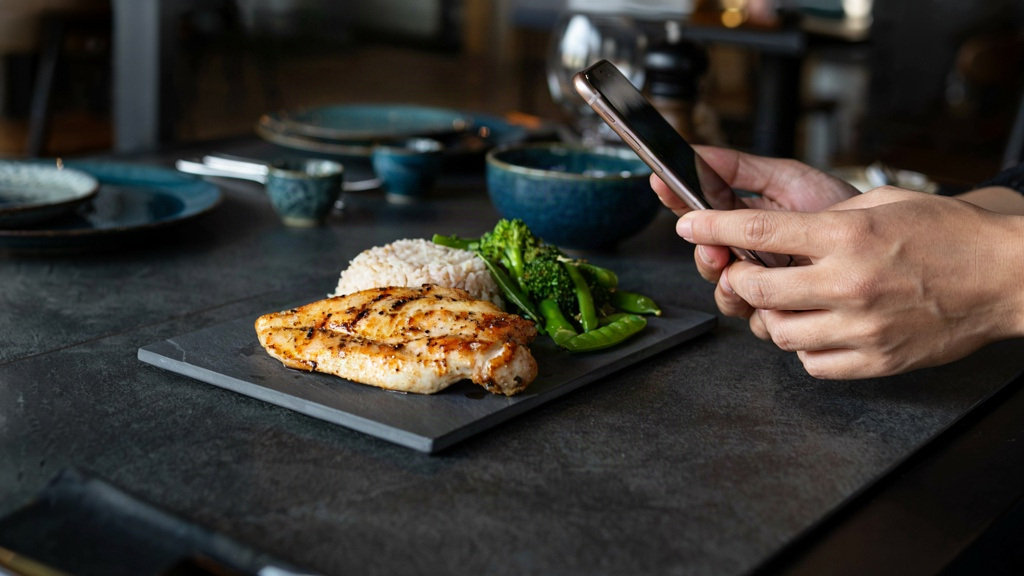
Macro tracking stopped being hard when the expectation of perfection ended. For social eaters and frequent restaurant-goers, the barrier has never been the math. It's the friction of logging. Apps loaded with streaks, scores, and shame states turn tracking into a chore. Consistency beats precision every time, and that consistency only survives if logging takes seconds, not minutes, and if rough estimates count as valid entries. This guide covers how to track macronutrients while eating out without abandoning the process on week two.
Quick answer: Log in seconds, estimate portions visually, trust trends over daily totals
Macro tracking at restaurants works best when users drop the perfectionism.
Identify your goal, weight loss, muscle gain, general health. Choose a logging method that fits your life: barcode scan, voice entry, database search. Estimate portions without weighing. Log the meal in under 30 seconds. Review progress weekly, not daily. Weigh daily and believe the weekly average instead of reacting to single-day variance.
The goal is consistency over accuracy. A day logged roughly is worth far more than a day not logged at all.
What you need first
Before logging a meal at a restaurant or social event, clarify these elements.
Define your macro goal. Are you tracking to lose weight, build muscle, maintain health, or manage a specific diet? Your goal determines how strictly you need to track and whether hitting exact numbers matters. Someone aiming for general health can log more loosely than someone in active muscle-building phases.
Choose a logging method that fits your routine.
Different methods suit different contexts. Barcode scanning works for packaged foods at food trucks or chain restaurants with pre-made items, scan the package and the app pulls nutritional data automatically. Voice logging lets you speak a meal description directly into your phone, works anywhere, leaves your hands free in social settings. Database search requires looking up the food in a pre-existing list, slower than scanning or voice, but available offline and without special hardware. Saved meals let frequent eaters re-log their usual restaurant orders with one tap. Once logged, a favorite chicken wrap or bowl stays in history for quick repeat entry.
Accept visual portion estimation. Exact weighing at a restaurant table is impractical and invites social friction. Visual estimation, using your hand, plate size, or mental comparison to common objects, provides enough accuracy for consistent tracking over time.
Research on macro tracking has consistently shown that rough logging prevents abandonment better than pursuing precision.
Understand the restaurant underestimation trap. Research shows that calories in restaurant meals are underestimated by an average of 175 calories, with error increasing as meal size grows. Meals perceived as healthy are underestimated by 20% in adults and 25% in adolescents compared to clearly indulgent ones of the same actual size. Account for this by estimating slightly higher than the menu states, or by adding a 15-20% buffer when unsure.
Step-by-step: Logging a meal at a restaurant in under 30 seconds
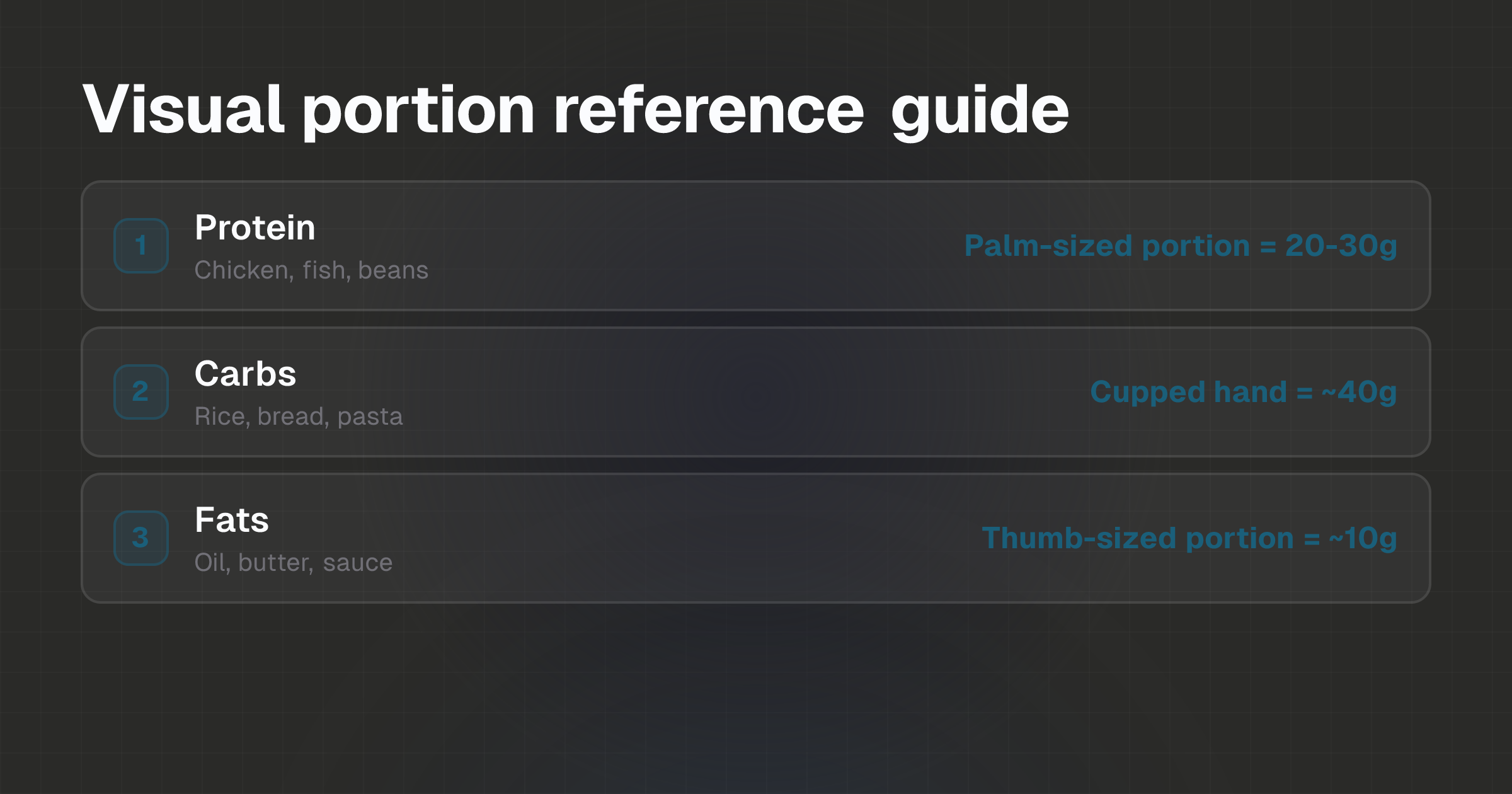
Identify the main components of your meal. Protein source, chicken, fish, beans. Carb source, rice, bread, pasta. Fat source, oil, sauce, cheese or nuts. Most restaurant meals contain all three.
Estimate protein quantity using your hand as reference. A palm-sized portion of cooked protein is roughly 20-30 grams. Err slightly high if uncertain; underestimation of restaurant calories is common.
Estimate carbs and fats visually. A cupped hand of cooked grains or starches is approximately 40 grams of carbs. A thumb-sized portion of added fat, oil, butter, visible sauce, is roughly 10 grams of fat.
Choose your logging input. If the restaurant or food has a barcode, scan it. If you prefer to speak, use voice input. If neither applies, search the app's database for the closest match: "grilled chicken breast with rice."
Log and move on. Enter the meal in seconds. Don't adjust for perfection or second-guess portion sizes mid-social event.
The entry is complete when posted.
Review weekly, not daily. At the end of each week, check your total macro intake and weight trend. Ignore single-day fluctuations. Consistency over precision matters most.
Example or scenario: Tuesday lunch at a casual restaurant
A user enters a casual lunch spot and orders grilled chicken, white rice, and steamed vegetables with olive oil.
The meal contains approximately 30 grams of protein, palm-sized chicken breast, 50 grams of carbs (cupped hand of rice), and 10 grams of fat (visible oil drizzle). Rather than weighing or measuring, the user opens their tracker, uses voice input to say "grilled chicken, rice, veggies, oil," and posts the entry in 8 seconds. The app logs it and moves forward.
No guilt, no overthinking.
By week's end, when the user reviews their macro totals and weight trend, that rough Tuesday entry contributes valid data to the pattern. Compare this to a user who waits for perfect measurement data: they delay logging, second-guess portion size, check the menu again, and spend five minutes perfecting one entry. They repeat this for three days, then abandon tracking altogether because it feels like a second job.
The rough logger stays consistent. The perfectionist drops out.
Common mistakes: What derails restaurant macro tracking
Striving for exact numbers. Perfectionism is the primary reason trackers fail. If an entry feels "wrong" because it isn't precise, the user is in a trap. Rough logging beats perfect avoidance.
Choosing complex apps with streaks, scores, and social features. Apps that gamify tracking or apply judgment, red failure states, broken streaks, public diaries, add friction. Users abandon them faster than simple, judgment-free tools. Logging fatigue drives disengagement more than inaccuracy does. For a comparison of tracking tools designed around frictionless entry, see Fuel8 vs MyFitnessPal.
Underestimating restaurant calories and healthy-seeming meals. Users consistently underestimate calories by an average of 175 calories per meal. Healthy-sounding dishes, salads with dressing, grain bowls, smoothies, are underestimated even more, 20% in adults, 25% in adolescents.
Add a buffer when logging restaurant food to account for hidden calories in sauces, oils, and preparation methods.
Reacting to daily weight swings. Weight fluctuates daily due to water retention, food volume, and hormones. Checking weight daily is useful for trend data, but acting on single-day numbers causes discouragement. Weigh daily and believe the weekly average instead.
Confusing early weight loss with sustainable progress. The first week of tracking shows rapid weight loss, but almost none of it is fat. Most is water and glycogen depletion. Understanding this prevents panic when weight loss slows after week one, it's normal, not a sign of failure.
Planning to "fix it tomorrow." A common error is eating off-plan at a social event and vowing to compensate the next day. This rarely works. You can go out on Friday, but you can't plan to fix it on Saturday. One meal doesn't break progress. Consistency over time matters far more than perfection on any single occasion.
FAQs
How accurate does restaurant macro logging need to be?
Accuracy within 10–15% is ideal, but exact precision is secondary to consistency. A meal logged roughly using visual estimates provides the necessary data trend, whereas striving for unattainable perfection leads to tracking abandonment.
What if I can't scan a barcode or voice-log at a restaurant?
Use the database search to find the closest match. A grilled chicken breast, steamed broccoli, and rice can be entered as separate database items in under 30 seconds. Close enough is acceptable. The goal is capturing the meal, not perfecting it.
Should I weigh food when eating out?
No. Weighing at a table creates social friction, disrupts the meal experience, and often is impractical. Visual estimation using hand-based references, palm for protein, cupped hand for grains, is accurate enough for consistent tracking and respects the social context of dining.
Why do my restaurant macros seem higher than expected?
Restaurant meals contain more hidden calories, oils, sauces, butter, preparation methods, than home-cooked versions. Research shows users consistently underestimate restaurant calories by an average of 175 calories per meal. Add a 15-20% buffer when logging restaurant food to account for this gap.
Is one off-plan meal going to ruin my progress?
No. One meal doesn't determine progress. Weekly and monthly trends do. If a social event takes a day off-plan, log it roughly and move forward. Consistency over 52 weeks determines outcomes, not perfection on any single occasion.
How often should I check my macro progress?
Check weekly, not daily. Review total macro intake and weight trends on a set day, Sunday evening, for example. Single days contain too much noise, water retention, food volume, hormones, to provide meaningful feedback. For more on tracking calories and macros alongside workouts, weekly averages reveal true progress and prevent discouragement from normal fluctuations.
- Eating Out & Nutrition Strategy
- macro tracker
- track macros
- restaurant macro tracking
- macro logging
Fuel8 is on the App Store.
A food diary for iPhone. It tracks protein, carbs and fat alongside calories, shows a weight trend rather than a daily verdict, never adds exercise calories back, and has no streaks to break.
Download on the App StoreGet the seven-day Fuel8 email guide, including how the app works and membership benefits. Then occasional recipes and product updates.
Your name and email go to Grow More Services L.L.C-FZ, the company that builds Fuel8, and are stored in Resend so we can email you the seven-day app guide, membership benefits, recipes and product updates. An account is not required. Unsubscribe in one click, any time.
This piece is editorial content and not medical or dietary advice. The full health disclaimer is below.