
How to Measure Food Portions for Calorie Tracking
Portion measurement error is the largest source of calorie tracking inaccuracy.
Fuel8 Editorial
29 October 2026
Updated 29 October 2026
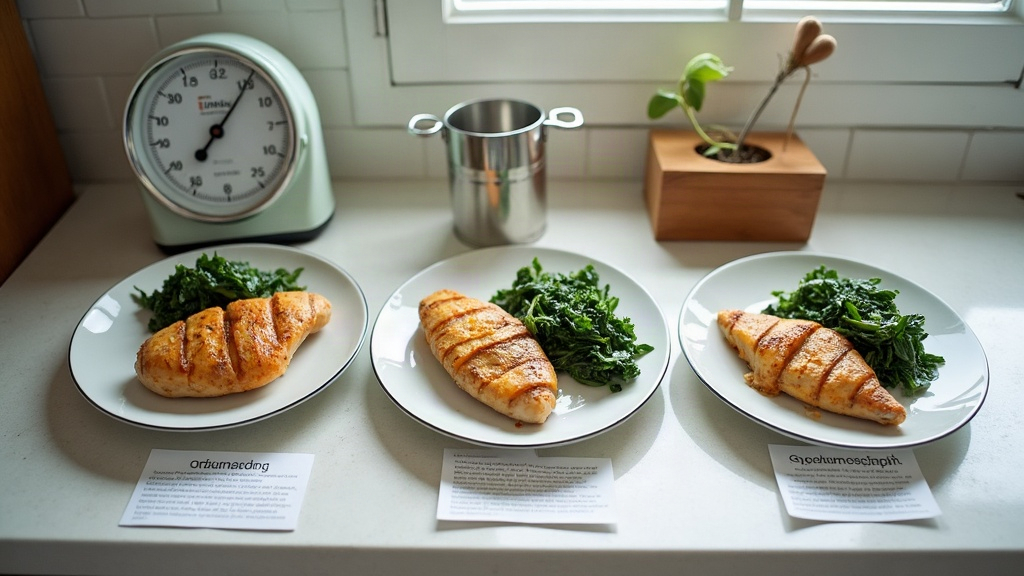
Portion measurement error is the single largest source of inaccuracy in calorie tracking. Weight scales measure actual mass and deliver the most precision, but most people estimate portions by eye or volume. Each method introduces different kinds of error. These errors compound when foods are mixed, cooked with added fats, or plated together, and the gap between what you log and what you actually ate can easily reach 100+ calories per meal, small misses that stack up over time.
Understanding where your measurement method breaks down, and which foods matter most, lets you focus effort where it'll move your tracking accuracy forward.
Quick answer: Why portion sizes are hard to measure
Portion size measurement error happens in three ways.
Visual estimation (judging by eye) introduces bias: research shows meals perceived as healthy are underestimated by 20% in adults compared to clearly indulgent ones of the same actual size. Volume measurement (using cups or spoons) fails because packing density varies, a cup of raw spinach and a cup of flour weigh very differently, and changes after cooking. Weight measurement is most accurate, but still depends on the database entry matching your specific preparation: cooking method, added oils, and ingredient ratios all shift calorie density.
Even when you measure precisely, the database may not reflect your exact version of a food.
What you need first
To reduce portion measurement error, identify which method fits your routine and what sources of error matter for the foods you eat most.
The three measurement tools and their trade-offs
Weight measurement (food scale)
Measures actual mass. Removes guesswork about density and packing.
Still requires that your database entry matches the preparation exactly, if it doesn't, error remains. Carrying a scale or logging after cooking is impractical for every meal if you eat out frequently.
Volume measurement (measuring cups and spoons)
Faster than weighing. No equipment beyond cups already in a kitchen.
But density varies widely between foods and preparation styles: raw leafy greens pack differently than cooked greens, and wet ingredients (sauces, oils) are difficult to portion accurately in cups. Error typically runs 10-20% depending on how consistently you pack each measurement.
Visual estimation (judging by eye)
Fastest. No tools required, works in restaurants or while eating.
Highly subjective, though. Bias skews estimates: healthy-framed foods are underestimated, portion shapes and irregular mixtures are harder to judge, and individual visual references (a deck of cards, a fist) work inconsistently. Error can exceed 20% for individual foods and compounds across a mixed meal.
Step-by-step: Reducing measurement error where it matters
1. Identify your highest-error foods
List the foods you eat most frequently or in largest quantities (oils, proteins, grains, sauces). These contribute the most to daily calorie totals, so measurement error here has the largest impact.
2. Weigh or verify your three to five highest-calorie items
If you eat chicken, olive oil, and nuts regularly, weigh a typical portion of each on a food scale. Compare the weight against what you would've estimated by eye or cup. This reveals your personal bias and the gap you're working with.
3. Verify the database entry for your specific preparation
When you log a weighed food, check the database for the exact version: is it raw or cooked? Does it include added oil?
Search for the most specific match. If the database shows "Chicken, cooked, no added fat" and you cooked yours in oil, that entry is incorrect for your meal. Mark the entry as an estimate or adjust the portion size to account for the added cooking fat.
4. Account for cooking method and added ingredients
Oils, sauces, and cooking fats are easy to underestimate because they distribute into other foods and are invisible in the final dish.
A vegetable wilted in a dry pan has no added fat; the same vegetable sautéed in oil carries 100+ additional calories per serving. Note what was added during cooking, or weigh the finished dish if accuracy is important to you.
5. Use the fastest method that fits your accuracy tolerance
If you eat out frequently and can accept ±10% error, visual estimation or a barcode scan (if available) is faster. If you meal-prep at home, weighing your ingredients gives you a verified baseline you can log the same way each time.
Mix methods: weigh at home, estimate when eating out.
The goal is a record that reflects your actual eating without friction that makes you stop tracking.
Example or scenario: A mixed meal with hidden error
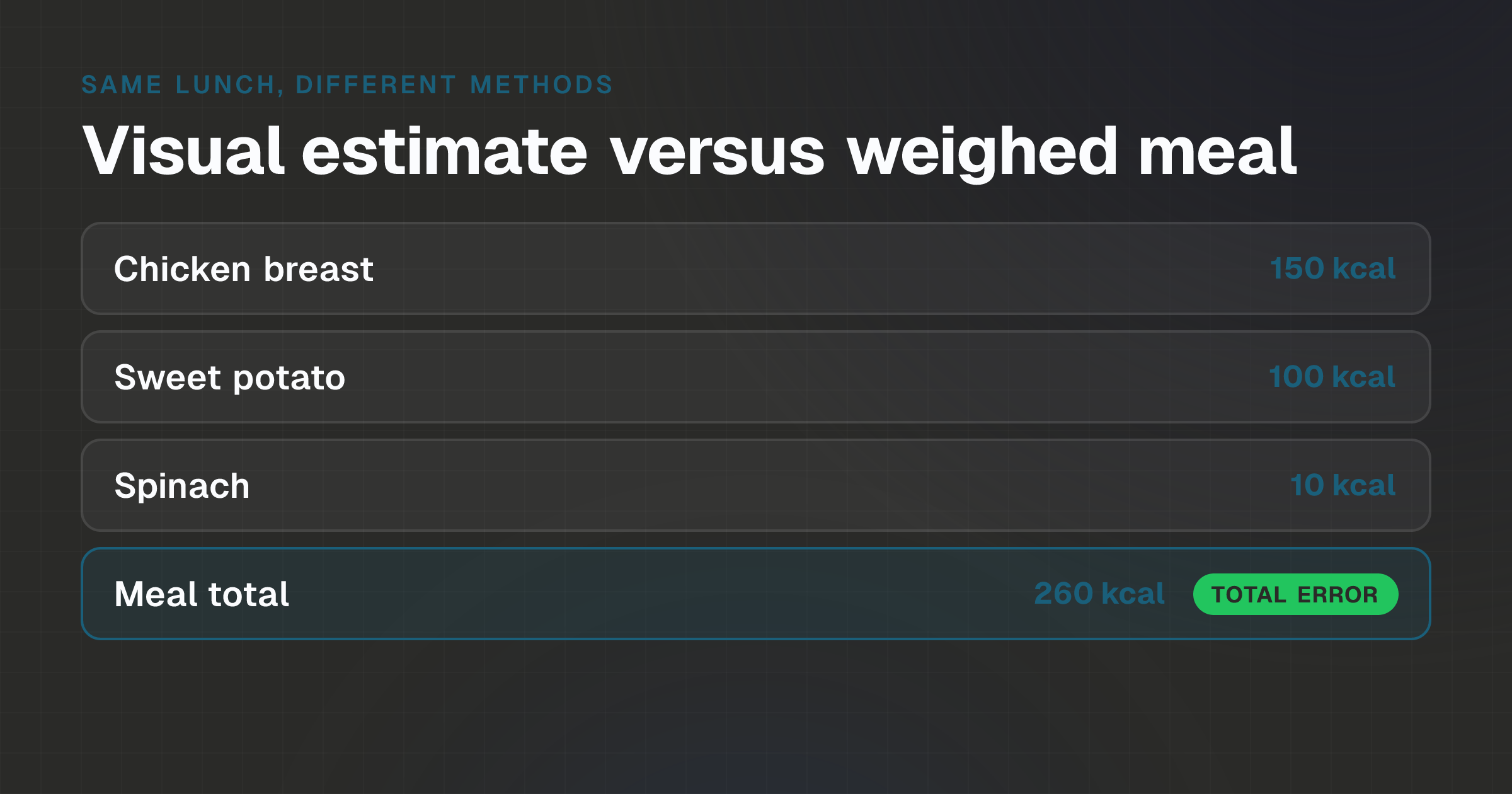
A typical lunch: grilled chicken breast, roasted sweet potato, and sautéed spinach.
Visual estimate:
- Chicken: "about the size of a palm" → 150 kcal
- Sweet potato: "medium-sized" → 100 kcal
- Spinach: "a handful" → 10 kcal
- Total: 260 kcal
What was actually in the meal:
- Chicken: 180 g cooked, no added fat = 280 kcal
- Sweet potato: 200 g cooked, with 1 tablespoon olive oil during roasting = 180 kcal
- Spinach: 150 g raw, wilted in a dry pan = 40 kcal
- Actual total: 500 kcal
Error: 240 kcal (92% underestimate)
The underestimate happened because palm-sized chicken was smaller than 180 g, sweet potato size reference missed the roasting oil (120 kcal alone), and spinach volume appeared small after wilting, though it started from a larger raw weight.
With weight measurement:
Weigh the cooked chicken (180 g) and sweet potato (200 g) after cooking. Search the database for "Chicken breast, cooked" and verify it lists no added fat.
Search for "Sweet potato, roasted" and check whether it includes oil, if not, add a separate entry for 1 tablespoon olive oil used in roasting. Log the spinach as "Spinach, cooked, no added fat" based on the raw weight (150 g) before cooking.
Result: 500 kcal logged. Error: 0 kcal (if database entries match the preparation).
The real meal here is the same. The difference is measurement method.
Common mistakes
Forgetting that cooking changes calorie density
Oil absorbed during cooking, water lost during roasting, and fat rendered from meat all shift the final calorie count. A portion of raw chicken is different from the same weight of cooked chicken because water evaporates.
Most databases separate "raw" and "cooked" entries for exactly this reason. Check which you're using, especially when you weigh a finished meal.
Underestimating restaurant meals
Research shows people underestimate restaurant meals by an average of 175 calories per meal. This error increases with meal size and happens because restaurant portions are larger than expected, contain more cooking fat than home-cooked meals, and sauces and dressings are harder to see.
If you eat out frequently, add 150-200 calories to your eye estimate, or use barcode scanning or voice logging to find a restaurant's nutrition data if available.
Believing more information always improves estimates
Adding incomplete or assumed details can make estimates worse.
For example, logging "eggs, mostly whites" instead of the actual egg count leads to a lower calorie estimate than the reality. If you don't know the exact ingredient ratio or preparation, mark the entry as an estimate and move on. Correct the entry you can verify. Leave the rest marked as an estimate.
Ignoring database entry accuracy
Even with precise measurement, if the database entry doesn't match your preparation, accuracy is compromised.
A single breakfast weighed at 514 kcal showed two estimates 175 calories apart depending on database entries: one assumed butter in cooking, another assumed oil. The weight of food doesn't change, but the calorie count does if the database entry is wrong for your preparation. Verify the database entry matches what you actually cooked.
Assuming one measurement method works for all foods
You don't need to weigh everything. Focus on weighing high-calorie or frequently consumed items (oils, proteins, nuts, grains).
For low-calorie foods like leafy greens, visual estimation introduces small absolute error. For restaurant meals, a barcode or the restaurant's own nutrition data is faster than visual estimation. Use the method that fits the food and the situation.
FAQs
How much error is acceptable in calorie tracking?
Most people can lose weight consistently with ±10-15% error, because weekly trends smooth out individual meal mistakes. One meal off by 150 calories affects that day's total, but the weekly average matters more.
Weigh daily. Believe the weekly average. explains how a weekly trend reveals whether your logging pattern is systematically over- or underestimating. If your goal is to refine macros (protein, fat, carbs) for performance, tighter accuracy (±5%) becomes more useful.
Why do "healthy" foods get underestimated more than indulgent ones?
Meals framed as healthy are underestimated by 20% in adults compared to clearly indulgent meals of the same actual size, according to research. This happens because people assume healthy foods are lower in calories and may also be prepared with less fat.
A salad dressed in oil carries as many calories as a burger, but the visual bias works against accuracy. The solution is to log the dressing and cooking fat separately, or weigh the finished meal.
Should I weigh raw or cooked food?
Weigh whichever form the database entry describes. Most databases list chicken separately as "raw" and "cooked." If you weigh cooked chicken and log it against a raw chicken entry, you'll underestimate calories because water weight has been lost.
Check the database entry before logging. For simplicity in meal prep, weigh raw ingredients, note the total weight, then log each ingredient as "raw." After cooking, the total weight changes but the calorie content is what you logged.
What if the restaurant or product doesn't list the cooking method?
Add a conservative estimate for cooking fat. Restaurant meals are typically cooked with more oil than home cooking, and sauces often contain fat.
If a nutrition label or menu entry doesn't specify, assume 1-2 tablespoons of oil per serving was used in preparation. This is a rough adjustment, but it reduces the systematic underestimate that happens when cooking fat is invisible. Over time, going out on Friday fits into consistent tracking without needing to be perfect on each meal.
Can I use food photos to improve estimates?
Comparing a food photo to a known reference object (a coin, a deck of cards) can reduce visual estimation error, but it doesn't eliminate it. Photos can't measure depth or density, so a photo of a bowl of pasta looks smaller than the actual volume.
Use photos as a reference during logging (to check your memory) or as part of a record, but combine them with weight or volume measurement for accuracy. Weighing delivers the most reliable result, as demonstrated in photographing versus weighing breakfast.
How does Fuel8 help reduce measurement error?
Fuel8 includes a database of 13,521 foods and supports barcode scanning and voice logging, both of which remove manual entry error when the portion size is known. If you scan a barcode, Fuel8 pulls the nutrition data from that specific product, eliminating guesswork about which version of a food you're eating.
If you use voice logging, you describe the meal naturally and Fuel8 logs it to the database, reducing the friction that causes people to stop tracking. Fuel8 still depends on you knowing (or measuring) the portion size accurately, the tool doesn't measure food for you. It makes logging faster and more accurate given what you know.
Last verified: 29 October 2026
- Macro Tracking Techniques
- portion measurement error
- calorie tracking accuracy
- food scale measurement
- visual portion estimation
Fuel8 is on the App Store.
A food diary for iPhone. It tracks protein, carbs and fat alongside calories, shows a weight trend rather than a daily verdict, never adds exercise calories back, and has no streaks to break.
Download on the App StoreGet the seven-day Fuel8 email guide, including how the app works and membership benefits. Then occasional recipes and product updates.
Your name and email go to Grow More Services L.L.C-FZ, the company that builds Fuel8, and are stored in Resend so we can email you the seven-day app guide, membership benefits, recipes and product updates. An account is not required. Unsubscribe in one click, any time.
This piece is editorial content and not medical or dietary advice. The full health disclaimer is below.